
Every manufacturing plant operates as an intricate ecosystem where every single element, from the physical building envelope to the smallest mechanical gear, plays a critical part in day-to-day operations. When this interconnected ecosystem runs in complete harmony, production lines move without friction, output remains reliably on schedule, product quality stays consistently high, and operational overhead stays predictable. Conversely, a single unnoticed breakdown in structural integrity, mechanical systems, inventory control, or facility hygiene can instantly trigger cascading bottlenecks that compromise your entire bottom line.
Running a smooth production environment requires moving past the outdated mentality of reactive troubleshooting. Rather than waiting for an overhead bay door to stick, a concrete floor slab to crumble, or a supply run to fall through, top plant managers implement meticulous operational discipline. Establishing dependable standard operating procedures, auditing infrastructure proactively, securing robust supply networks, and keeping plant hygiene spotless transforms manufacturing from an unpredictable grind into a resilient powerhouse of productivity.
Establishing Robust Facility Infrastructure
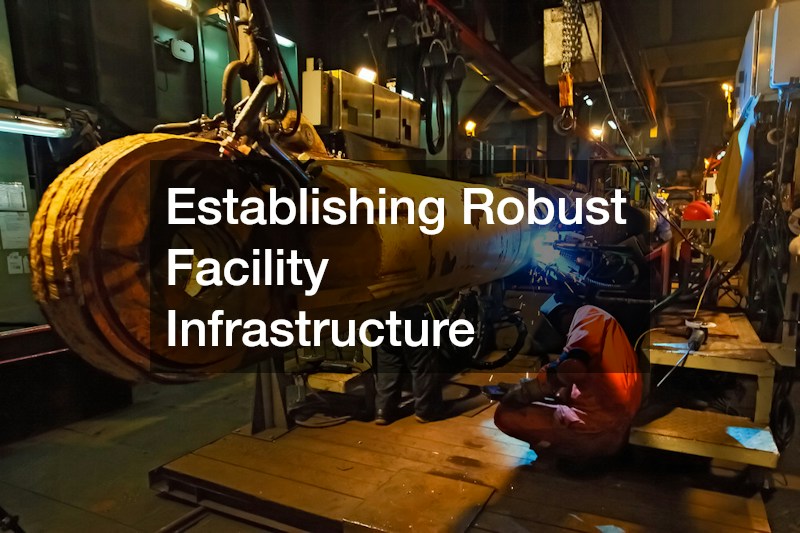
A reliable manufacturing line begins with the structural integrity of the facility itself. Physical plant wear and tear is not simply an aesthetic nuisance; damaged flooring or crumbling foundations compromise delicate machinery balance and introduce dangerous trip hazards for personnel.
Leveling and Reinforcing Heavy Equipment Foundations
Heavy machinery exerts immense dynamic loads, cyclic vibrations, and ground pressures on your plant slab. Partnering with seasoned industrial concrete contractors ensures that all equipment pads, loading docks, and foundation slabs are poured and reinforced to exact load-bearing specifications. These specialized teams understand how deep-set rebar grids, sub-base compaction, and tailored concrete mix designs prevent slab settlement under punishing industrial machinery.
To keep machine foundations stable over decades of heavy service, facilities managers should incorporate standard maintenance evaluations:
- Conduct ultrasonic testing or laser leveling scans annually to catch floor settling before misalignments damage precision gearboxes or spindle assemblies.
- Seal contraction joints and expansion gaps with elastomeric industrial compounds to prevent moisture from eroding sub-base materials.
- Isolate high-vibration equipment, such as forging presses or heavy stamping lines, using dedicated inertia blocks and elastomeric isolation pads so surrounding equipment is shielded from destructive resonant vibration.
Protecting Surfaces from Chemical Infiltration and Mechanical Friction
Industrial manufacturing floors constantly battle oil drips, caustic chemical washdowns, and heavy rolling traffic from forklifts. Applying a high-grade epoxy coating over concrete substrates seals microscopic pores, creating an impermeable barrier against acid, fuel, and moisture intrusion. This hard-wearing barrier drastically cuts down on concrete dusting, which preserves sensitive electronics and cleanroom assemblies across the wider facility.
A durable floor coating strategy demands strict adherence to preparation and post-application protocols:
- Thoroughly profile concrete substrates via diamond grinding or shot blasting to guarantee mechanical adhesion and eliminate surface contaminants.
- Specify multi-coat polymer systems that feature high solids content, quartz aggregate broadcasting for slip resistance, and chemical-resistant topcoats tailored to plant chemistries.
- Enforce designated drying cure times before allowing any foot traffic or material handling machinery back onto newly resurfaced shop areas.
Modernizing Surface Preparation and Equipment Restoration
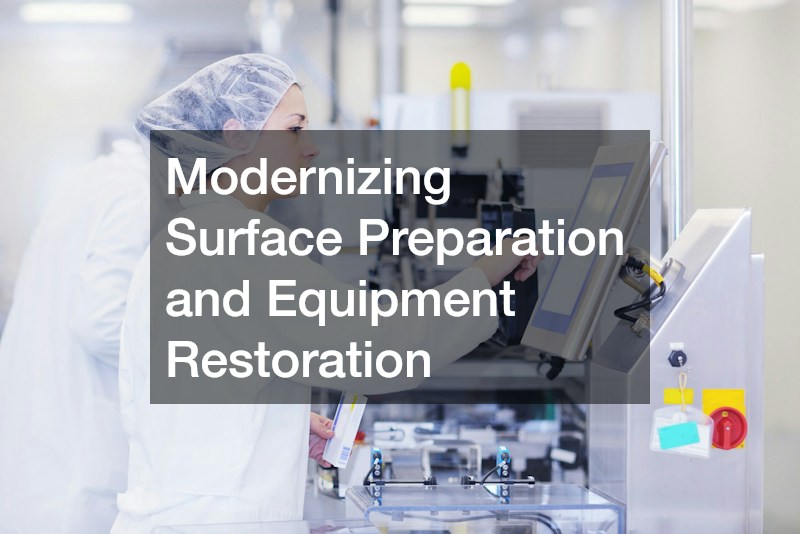
Machine tooling, pipework, and metal transport racks suffer persistent oxidation, chemical scaling, and coating fatigue. Keeping these core structural assets functional requires rigorous restoration practices that preserve tight machine tolerances.
Deploying Abrasive Stripping Techniques for Machinery Refurbishment
When preparing structural steel beams, storage tanks, and heavy machinery chassis for recoating, abrasive sandblasting serves as an essential method for stripping rust, mill scale, and degraded paint. Selecting the correct media, whether garnet, aluminum oxide, or crushed glass, ensures uniform substrate preparation without gouging or warping thin-gauge metals.
Implementing comprehensive abrasive surface preparation involves several best practices:
- Select abrasive media hardness and grit mesh size based strictly on the metallurgy and wall thickness of the part being treated.
- Install dedicated filtration dust collection systems and HEPA negative-air enclosures to contain fine airborne particulate during off-line component overhauls.
- Apply moisture-curing primer immediately following blast operations to halt flash rusting across bare metal surfaces.
Preventing Premature Corrosion on Plant Structural Frameworks
Structural framing within humid, vapor-laden production plants deteriorates rapidly if left uninspected. Steel trusses, roof purlins, overhead pipe bridges, and ventilation duct networks require scheduled visual checkups and protective surface reapplications.
- Implement ultrasonic thickness gauge testing on load-bearing structural columns subjected to corrosive internal ambiances.
- Establish zoned paint inspection schedules where high-humidity bays receive touch-up coatings on an aggressive bi-annual cycle.
- Wash down structural framework near open processing vats using high-pressure neutralizers to remove corrosive airborne salt or chemical deposits.
Streamlining Facility Access and Material Throughout
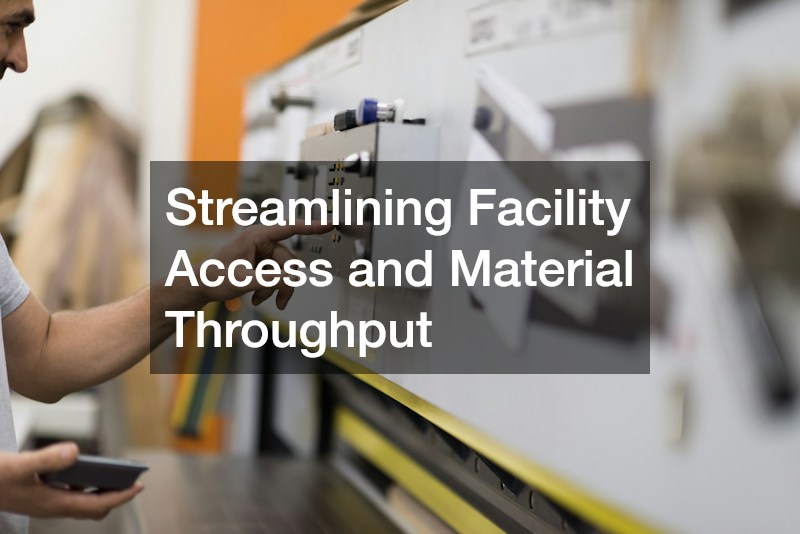
A factory cannot run smoothly if raw inputs and finished goods are stranded at perimeter access points. Inbound and outbound logistics bays must operate with absolute mechanical reliability to prevent expensive transportation delays.
Maintaining High-Speed Overhead and Dock Doors
Loading bays and transit airlocks endure hundreds of opening and closing cycles every shift. Contracting an experienced garage door company guarantees that heavy-duty commercial roll-up doors, high-speed fabric doors, and motorized overhead assemblies remain finely balanced and fully operational. Routine replacement of worn counter-balance springs, track alignments, and sensor checks prevent costly physical door collapses that can shut down whole shipping wings.
Ensure uninterrupted dock bay logistics by following targeted operational checkpoints:
- Inspect high-tensile lift cables, torsion spring tensions, and safety edge sensors every thirty days to avoid catastrophic door failure.
- Replace worn side-seal weatherstripping and brush draft guards along dock doors to keep temperature control intact and block pest entry.
- Transition high-frequency internal transport doorways to rapid-acting roll doors that open and close within seconds, preserving internal heating and cooling.
Designing Smooth Internal Transit Corridors
Forklifts, tuggers, and autonomous mobile robots must navigate plant thoroughfares without running into blind intersections or tight choke points. Wide lanes and intelligent floor routing improve velocity and prevent workplace incidents that stop work entirely.
- Mark permanent high-visibility floor paths that segregate pedestrian walkways from automated guided vehicles and counterbalanced forklifts.
- Install convex wide-angle safety mirrors and motion-activated overhead hazard lights at all four-way intersections and blind building corners.
- Position intermediate staging drop zones outside processing lanes to keep throughways entirely clear of pallet overflow and packing dunnage.
Elevating Heavy Lifting Operations and Overhead Rigging
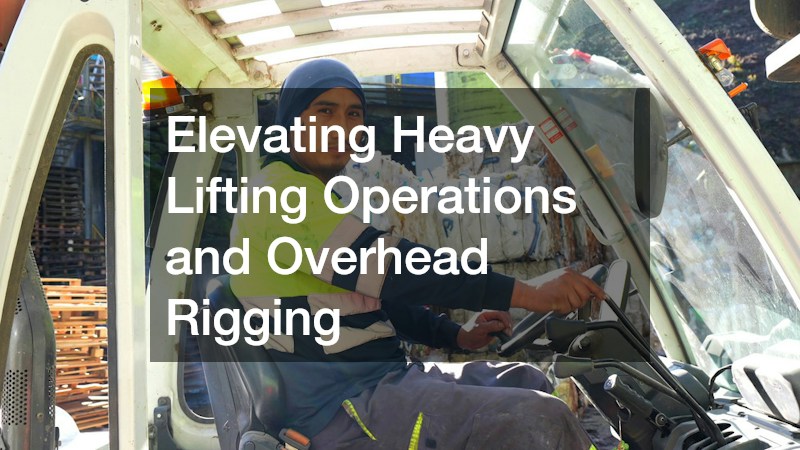
From relocating enormous casting dies to setting modular packaging units, overhead hoisting equipment represents both a tremendous mechanical advantage and a notable operational vulnerability if neglected.
Ensuring Precision and Safety in Rigging Movements
Maneuvering heavy manufacturing components into active assembly cells requires dependable hoisting hardware. Deploying a well-maintained crane on your shop floor allows riggers to move oversized dies, assembly frames, and raw stock safely across plant zones. Rigorous pre-shift hook inspections, limit switch testing, and cable spooling audits ensure overhead machinery carries heavy loads securely without risk of sudden drop-load failures.
To uphold peak reliability across your heavy overhead hoisting systems:
- Mandate daily pre-operational walk-throughs where hoist brakes, emergency stop mechanisms, and wireless control pendulums are tested under no-load conditions.
- Standardize rigging gear retirement guidelines, immediately removing any synthetic web sling, wire rope choker, or forged shackle that shows fraying or bending.
- Maintain complete records of certified proof-load testing and hook throat measurements to catch structural metal fatigue before catastrophic deformation strikes.
Optimizing Vertical Assembly Workflows
Integrating vertical lifting directly into production lines streamlines human ergonomics and accelerates cycle times. Using localized jib cranes, pneumatic balancer arms, and specialized vacuum lifters eliminates manual handling strains for operators while shielding sensitive assemblies from accidental drop shock.
- Position articulated jib hoists directly above secondary fabrication cells so operators can transfer heavy parts into CNC fixtures without waiting on primary bridge hoists.
- Standardize lifting tackle and custom die-turnover brackets across identical machinery cells to minimize changeover downtime.
- Calibrate motorized hoist travel limit switches to prevent impact collisions against structural end-stops or adjacent overhead pipe racks.
Optimizing Bulk Resource and Raw Material Management
Raw materials fuel manufacturing lines, and any disruption in storage, flow, or delivery halts processing just as quickly as a blown motor. Material handling frameworks must keep bulk materials dry, accessible, and continuous.
Handling Granular and Powdered Inputs Efficiently
Processing facilities handling grains, resins, cementitious compounds, or chemical catalysts rely on specialized pneumatic or mechanical conveying systems. Successfully moving dry bulk materials through industrial silos, hoppers, and screw feeders requires active humidity control and flow-aid automation to stop product clumping and silo bridging.
Maintain seamless bulk ingredient flow by focusing on proven handling strategies:
- Fit storage silos with bin aerators, fluidizing pads, or mechanical vibration pads to keep powders flowing smoothly toward discharge valves.
- Enforce systematic pneumatic pipeline clean-outs to eliminate material buildup that chokes transport lines and increases head pressures on transfer blowers.
- Install continuous bin-level radar or strain-gauge load cells so procurement teams maintain continuous inventory visibility without climbing storage silos.
Managing Inventory Replenishment with Real-Time Data
Stockouts of basic production inputs cause sudden shifts in production schedules, generating unnecessary machine downtime and wasted labor hours. Integrating material usage tracking with your broader enterprise resource management software creates automatic alerts when bulk silos reach critical reorder points.
- Implement automated vendor-managed inventory arrangements where suppliers monitor tank levels remotely and trigger replenishment dispatches automatically.
- Keep secondary holding hoppers filled to buffer production during bulk silo inspections, filter cleanings, and intake switchovers.
- Calibrate gravimetric feeders and screw meters regularly to ensure continuous processing accurately dispenses recipes without ingredient waste.
Securing Uninterrupted Power, Fuel, and Utilities
A production facility cannot afford power fluctuations, heating outages, or sudden interruptions to burner fuel. Utility resilience guarantees that thermal and electrical processes operate without interruption.
Safeguarding Continuous Generator and Fleet Fueling
When bad weather knocks out the electrical grid or cold temperatures strain utility natural gas lines, manufacturing sites lean heavily on standby generators and localized boilers. Establishing a dependable schedule with a fuel delivery service guarantees that on-site diesel storage tanks, emergency backup generators, and internal transport fleets never face empty supply lines during long operational runs.
Protect your backup power and plant heating infrastructure with reliable fuel management strategies:
- Schedule automated top-offs for fuel reservoirs on a fixed calendar cadence so storage tanks remain primed for peak emergency demands.
- Sample and polish stored diesel fuel bi-annually, filtering out water condensation and microbial contamination that can ruin high-pressure injectors.
- Install direct fuel telemetry monitors with remote alerts to warn operations whenever tank levels drop below designated emergency reserve margins.
Maintaining Peak Efficiency Across Pneumatic and Steam Loops
Compressed air and process steam rank among the most expensive utilities to produce in modern manufacturing. Undetected line leaks force compressors and boilers to run continuously, wasting energy and dropping operational pressures.
- Conduct monthly acoustic ultrasound surveys along high-pressure pneumatic loops to detect and eliminate air leaks at hose fittings, quick-disconnects, and regulators.
- Rebuild mechanical steam traps systematically to prevent live steam loss and stop water hammer damage within return condensate pipe loops.
- Insulate process hot water and steam transfer lines with high-density mineral wool jackets to cut thermal radiation loss and preserve boiler efficiency.
Coordinating Plant Upgrades and Expansion Projects
Manufacturing operations evolve continually, demanding floor plan modifications, utility drops, structural reinforcements, and cleanroom additions. Managing major plant alterations while keeping ongoing assembly lines running requires expert coordination.
Managing Structural Expansion Without Halting Production
Executing internal civil improvements or building expansions while daily operations continue calls for strategic structural planning. Partnering with a vetted commercial construction contractor ensures that dust barricades, structural load paths, temporary power grids, and egress safety are carefully planned around active assembly schedules.
Ensure complex structural installations cause minimal disruption to live assembly runs:
- Isolate ongoing construction zones with positive/negative air pressure containment walls and HEPA exhaust units to prevent dust migration into manufacturing bays.
- Schedule major tie-ins, heavy excavation work, and overhead utility hookups during routine plant shutdown windows or quiet holiday shifts.
- Run rigorous structural load calculations before cutting into existing floors or modifying overhead framing for new utility supports.
Planning Facility Additions and Utility Expansions
Adding a new manufacturing line requires substantial planning across power, gas, and structural envelopes. Engaging a comprehensive commercial construction service streamlines this growth, coordinating mechanical engineers, structural trades, and environmental regulators under a unified design-build framework.
- Complete thorough 3D building information modeling surveys prior to construction to map subterranean utilities and prevent costly utility strikes.
- Build scalable modular utility headers along major corridors so new machinery bays can tie into water, air, and electrical drops without facility-wide shutdowns.
- Plan exterior staging pads and contractor access pathways away from primary shipping gates to prevent delivery congestion.
Upholding Comprehensive Plant Sanitation and Contamination Control
Dirt, oil mist, production scrap, and metal fines are constant byproducts of industrial manufacturing. Left unchecked, dust accumulations foul optic sensors, ignite safety hazards, and create unsafe, cluttered work environments.
Eliminating Particulate and Chemical Residues Facility-Wide
Maintaining spotless production zones, technical cleanrooms, and high-traffic mezzanines demands specialized techniques and equipment. Contracting professional commercial cleaning services ensures that manufacturing sites receive deep, systematic cleanings that target difficult-to-reach overhead ducting, structural ledges, and greasy equipment exteriors.
Achieve higher hygiene, safety, and operational standards with a rigorous cleaning regimen:
- Implement systematic high-bay vacuuming using explosion-proof HEPA extractors to remove combustible dust layers from overhead beams and light fixtures.
- Deploy automated floor scrubbers daily over primary aisles, using tailored degreasers to remove fluid slicks and keep tire tracks clean.
- Schedule deep mechanical degreasing around stamping, forging, or die-casting machines to stop slippery residue from accumulating on work platforms.
Institutionalizing Five-S Standards on the Production Line
Cleanliness cannot be treated purely as an outsourced, end-of-week task; it must be built into everyday floor habits through 5S methodology (Sort, Set in order, Shine, Standardize, Sustain).
- Provide mobile cleaning shadow boards at every production cell, stocking oil-absorbent pads, non-abrasive scrapers, and broom heads within arm reach of the operator.
- Mandate a fifteen-minute end-of-shift shine protocol where operators clear chip pans, wipe tool holders, and inspect fluid collection sumps.
- Carry out unannounced internal 5S audits every quarter, rewarding production cells that consistently maintain clean, organized workspaces.
Cultivating Workforce Proficiency and Operational Standard Operating Procedures
Even the finest machinery, smoothest flooring, and cleanest bays cannot sustain performance without a skilled, engaged, and safety-conscious workforce.
Developing Strict Standard Operating Procedures
Ambiguity breeds variation, and variation degrades manufacturing throughput. Every process, whether tool changeovers, batch mixing, or line sanitation, requires visual standard operating procedures posted directly at the workstation.
- Use photographic, step-by-step visual work instructions rather than dense text binders to clarify setups, safety clearances, and part orientations.
- Review standard operating procedures twice a year alongside experienced line operators to capture continuous improvement tweaks and ergonomics updates.
- Implement digital checklists on shop-floor tablets so operators must verify critical machine settings before firing up automated cycles.
Implementing Cross-Functional Training Frameworks
Single-point dependencies create severe production bottlenecks when essential technicians take leave, retire, or face unexpected absences. Robust plants cross-train line workers to run adjacent machinery with equal confidence.
- Build a skill-matrix dashboard mapping every machine operation to show how many certified line operators are available per shift.
- Rotate operators systematically through primary, secondary, and inspection roles each month to sustain cross-functional competence.
- Pair junior machine tenders with veteran millwrights and operators under formal mentorship programs to preserve tacit operational knowledge.
Maintaining continuous, peak-efficiency manufacturing demands unyielding attention to structural stability, equipment maintenance, and plant organization. When plant managers actively care for foundational concrete, restore corroded surfaces, maintain entry doors, streamline overhead rigging, secure bulk inputs, lock in reliable utility deliveries, coordinate structural work, and maintain hygienic work floors, production stays dependable. By weaving these practical, protective measures into standard operating routines, manufacturing organizations protect their investments, ensure employee safety, and secure sustained profitability across every production cycle.